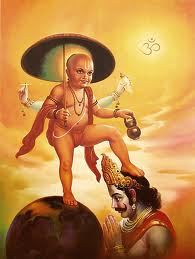
Though we know that Lord Vishnu has ten incarnations, few people know that the Bhagavata Purana gives a longer list of 22, which many writers count as 21. As per Hindu mythology and the Puranas, Lord Vishnu has 21 or 22 named incarnations in that list, and the same text says the real number is beyond counting.
The full 21 are told in three articles on this site: part 1, part 2 and part 3.
Lord Vishnu’s incarnations: why 10, 21, 22 or 24?
Ask ten people how many incarnations Lord Vishnu has, and you may hear different numbers. All of them have a source. The count depends on which text and which tradition you follow.
The ten: Dashavatara
The best known list is the Dashavatara. It runs from Matsya the fish, Kurma the tortoise and Varaha the boar, through Narasimha, Vamana, Parashurama, Rama and Krishna, to Buddha (in some lists Balarama) and Kalki, who is yet to come. Many temples and festivals use this list. Read the Dashavatara story for the ten in order.
The 21 or 22 of the Bhagavata Purana
The third chapter of the first canto of the Bhagavata Purana gives an earlier, longer list of 22 incarnations. The Bhagavata then states in verse 1.3.26 that the incarnations of the Lord are innumerable, “like rivulets flowing from inexhaustible sources of water”. So the list is not meant to be a complete count.
The 21 in the three articles on this site follow the same order, starting with the Kumaras, Varaha, Narada, Nara-Narayana and Kapila. Writers differ on how they number a list this long. For example, some merge or split entries (Balarama and Krishna are counted as two, the nineteenth and twentieth, in the text), and that gives 21 in one list and 22 in another.
The 24 and other lists
Some lists give 24 incarnations. Other texts, such as the Mahadevi Bhagavata, give still other numbers. None of these lists is “wrong”. Each shows what a tradition chose to highlight.
Sages and kings among the 22 incarnations
The list opens in the beginning of creation. First come the four unmarried sons of Brahma, the Kumaras, who took a vow of celibacy and performed severe austerities. Second is Varaha, the boar, who lifted the earth from the nether regions.
Third is the divine sage Narada, who collected teachings on devotion. Fourth are Nara and Narayana, the twin sons of Dharma’s wife, who performed exemplary penance. Fifth is Kapila, who taught the elements of creation to Asuri Brahmana when that knowledge had been lost.
Sixth is Dattatreya, the son of the sage Atri and Anasuya, who spoke of the highest truth to Alarka, Prahlada and others. Seventh is Yajna, the son of Ruchi and Akuti. Eighth is King Rishabha, son of Nabhi and Merudevi, who showed the path of self-control. Ninth is King Prithu, who made the earth yield crops.
From the fish to the churning of the ocean
Tenth is Matsya, the fish. When a flood covered the world after the period of Chakshusha Manu, he protected Vaivasvata Manu on a boat. Eleventh is Kurma, the tortoise, whose shell carried Mount Mandara while the devas and asuras churned the ocean. Read the churning of the ocean.
The twelfth is Dhanvantari. In the thirteenth form, Mohini, Vishnu charmed the asuras with a woman’s beauty and gave the nectar to the devas. See Mohini, the avatar of Lord Vishnu.
Narasimha, Vamana and Parashurama
The fourteenth is Narasimha, who tore apart the demon Hiranyakashipu with his nails, as a carpenter splits a cane. See the Narasimha avatar. The fifteenth is Vamana, a dwarf Brahmin who came to King Bali’s sacrifice and asked for just three steps of land. Read the Vamana avatar.
The sixteenth is Parashurama, who, angry at the kings who rebelled against the Brahmins, cleared the earth of Kshatriyas twenty-one times. See the Parashurama avatar.
Vyasa, Rama, Krishna and Balarama
The seventeenth is Vyasa, born to Satyavati and the sage Parashara, who divided the one Veda into branches because people had become less capable. See the story of Ved Vyasa. The eighteenth is Rama, who bridged the ocean and killed Ravana.
The nineteenth and twentieth are Balarama and Krishna of the Vrishni (Yadu) family, who removed the burden of the earth. Read the story of Krishna.
Buddha and Kalki at the end of the list
The text then speaks of Buddha, son of Anjana in the province of Gaya, who appears in the beginning of Kali Yuga. Last is Kalki, who is yet to come: at the meeting of two yugas, when rulers have become plunderers, he will be born as the son of Vishnu Yasha.
Read the 21 incarnations
- 21 incarnations of Lord Vishnu – Part 1 (the Kumaras, Varaha, Narada, Nara-Narayana, Kapila and more)
- Part 2
- Part 3
Questions readers ask
Is Buddha an incarnation of Vishnu?
Many Vaishnava lists include him. Buddhists do not accept this, and some Hindu lists leave him out.
Which is the first incarnation?
In the Bhagavata list, the four Kumaras come first. In the Dashavatara, Matsya the fish comes first.
How many incarnations are correct?
The Bhagavata Purana itself says they are innumerable. 10, 21, 22 and 24 are lists, not limits.
भगवान विष्णु के कितने अवतार हैं?
सबसे प्रसिद्ध सूची दशावतार की है। श्रीमद्भागवत (1.3) में 22 अवतारों की सूची है, जिसे कई लोग 21 गिनते हैं। वही ग्रंथ (1.3.26) कहता है कि अवतार असंख्य हैं।
Sources and versions
The list follows Srimad-Bhagavatam 1.3.6-26 on Vedabase (Prabhupada’s translation): verse 1.3.26 and the verses before it. Other editions and commentators number the list differently.
Read next: Lord Yama has good looks · Lord Ayappa – son of Lord Vishnu and Lord Shiva · The meaning and importance of Lord Vishnu’s mantra