The gods and the demons are churning the ocean of milk, hoping for the nectar of immortality. Instead the ocean first gives up Halahala, a poison so fierce that its fumes threaten to burn all the three worlds. The gods run in fear. Only one god does not run. Shiva takes the poison in his palm and drinks it. Parvati, watching, presses his throat so that the poison does not go down into his body, and it stays there, turning his neck blue for ever.
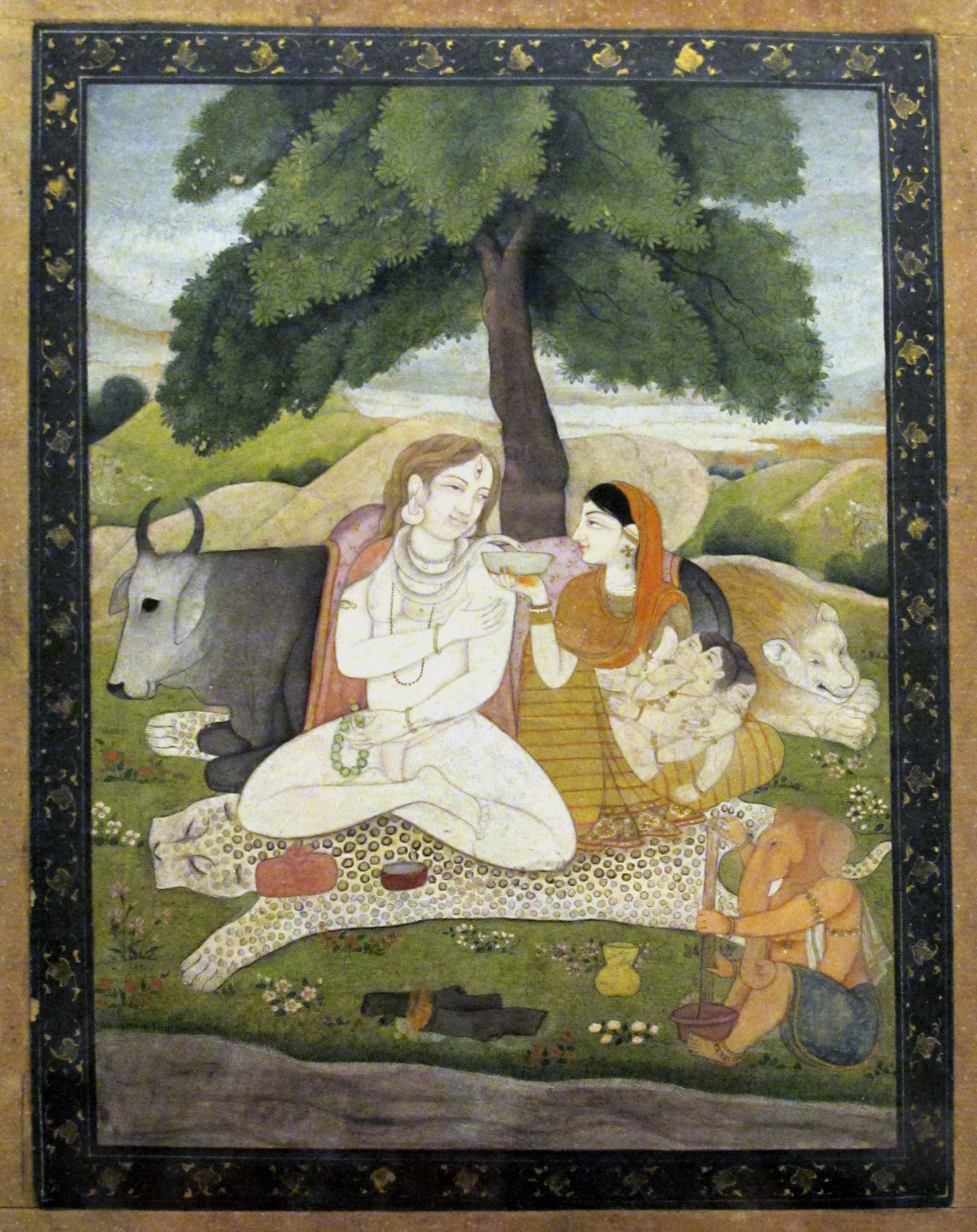
This is Shiva: the ascetic of Kailash who is also the husband of Parvati and father of Ganesha and Kartikeya; the lord of destruction who is gentle to a devotee who offers only water and a bel leaf; the one who dances as Nataraja and sits in silence as the first yogi. He is worshipped across India as a lingam, in twelve great Jyotirlinga shrines, and in every village Shiva temple. This page brings together everything on Freeflow about Lord Shiva: his stories, his forms, the Jyotirlingas, Mahashivaratri and Shravan, and the mantras.
Who is Lord Shiva? Shiva (Mahadev, Shankara, Rudra, Pashupati, Neelkantha) is one of the principal gods of Hinduism. He is counted in the Trimurti as the one who dissolves the universe so that it can be created again, and the Shaiva tradition regards him as the supreme god. He is shown with a crescent moon, the river Ganga flowing from his matted hair, a third eye, a trident and a damaru drum, a snake around his neck, and he is most often worshipped in the aniconic form of the lingam.


Lord Shiva at a glance
| Also called | Mahadev, Shankara, Shambhu, Rudra, Pashupati, Neelkantha, Bholenath, Nataraja. 108 names of Lord Shiva and भगवान शिव के 108 नाम |
|---|---|
| Consort | Sati, and after her Parvati (the Devi, Shakti). See Sati and the Shakti Peeths |
| Children | Ganesha and Kartikeya (Skanda, Murugan) in the common tradition; Ayyappa (born of Shiva and Vishnu as Mohini) and Ashokasundari in some regional traditions. Shiva’s other sons |
| Abode | Mount Kailash in the Himalayas (and the cremation ground, Shmashana). Kailash Dham |
| Vahana | The bull Nandi |
| Weapon and symbols | Trishula (trident), Pashupata weapon, Pinaka bow, parashu (axe); damaru, crescent moon, third eye, Ganga, snake Vasuki, tripundra marks, rudraksha |
| Sacred day | Monday (Somvar), the Pradosh fast, and Mahashivaratri. Story of Monday and Pradosh Katha |
| Festivals | Mahashivaratri (Magha or Phalguna, February-March), the month of Shravan (Sawan), Teej, Kartik Purnima, Bhairava Ashtami |
| Mantras | Om Namah Shivaya, the Maha Mrityunjaya mantra. Maha Mrityunjaya Mantra: lyrics and meaning |
| Main shrines | The twelve Jyotirlingas, Kashi, Kedarnath, Pashupatinath (Nepal), Chidambaram (Nataraja) |
Good starting points if you are new: Lord Shiva: an enigma (common questions answered), Unveiling the mysteries and fascinating world of Lord Shiva, Ten unknown facts about Lord Shiva and The origin of Lord Shiva.
Stories of Shiva
Origin, forms and avatars
In the Shiva Purana Shiva is without beginning, and he first appears before Brahma and Vishnu as an endless pillar of fire, which neither of them can measure. That story is told in the posts below, along with the 19 forms of Shiva (avatars) listed in the Shiva Purana tradition.
- The origin of Lord Shiva – the pillar of fire that appeared when Brahma and Vishnu quarrelled
- Lingodbhava – the emergence of the linga as the supreme form
- The story of Shiva’s curse to Brahma – why Brahma has so few temples, and the ketaki flower
- Exploring the 19 avatars of Lord Shiva – the forms of Shiva named in the Shiva Purana
- Lord Nataraja – the dancing Shiva of Chidambaram
- Lord Shiva as Mahakal – the Shiva of Ujjain, decorated every day
- Why is Lord Shiva known as Kalantaka? – the boy Markandeya and the lord who defeated Death
- Shivlinga: the symbol of power and energy – what the linga stands for
- Rudraksh – the sacred bead said to have come from Shiva’s tears
- The story of Kali – the Devi who stood over Shiva in battle
- Shiv Khori: the cave where Shiva hid from Bhasmasura
- Dev Deepawali: why the gods light lamps in Kashi
- Vaikuntha Chaturdashi: Vishnu’s eye for Shiva
Why is Shiva worshipped as a lingam?
There are a few versions in the Puranas. One of them, told in one of the older Freeflow posts, says that there was a great sacrifice and the sage Narada was asked who should receive its fruit. Narada said that Vishnu, Brahma and Shiva were all worthy, but the sage Bhrigu should find out which of them had the most patience. Bhrigu went to Brahma, who was busy and did not notice him, and cursed him to have no temples on earth. Then he went to Shiva in Kailash, who also did not notice him, and Bhrigu cursed him to be worshipped only as a lingam. This is one explanation given for why Shiva is worshipped mostly as a lingam. Other accounts, such as the Lingodbhava story above, link the lingam to the pillar of fire. This one is folk tradition and the versions differ.

The blue throat: Neelkantha and the churning of the ocean
Lord Shiva is also known by the name Neelkantha, which literally means ‘the blue-throated’. The story goes that when the poison came out of the ocean, Shiva swallowed it to save the world. When Goddess Parvati learnt that Shiva had swallowed the poison, she rushed to hold his neck so that the poison would not travel downwards, and that is how his neck became deep blue.


- Lord Shiva’s blue throat – the story of Neelkantha
- Samudra Manthan: the churning of the ocean – the full story of the ocean, the poison and the nectar
- Mahashivaratri: the story behind the festival – includes the churning and the poison
Shiva, Parvati and the family
Shiva’s first wife Sati burned herself in the fire of her father Daksha’s sacrifice, and Shiva, grief-struck, carried her body across the land. Where the parts fell, the Shakti Peeths came to be (the number is 51, 52 or 108 depending on the text; see the Shakti Peeth hub). Sati was reborn as Parvati, the daughter of Himavan, and she did penance until Shiva accepted her. The first day of Navratri is for Parvati as Shailputri.
- Sati and the Shakti Peeths – the story of Sati and Shiva
- Sati Devi story in Hindi – सती की कथा
- Maa Shailputri – Parvati as the daughter of the mountain
- Haritalika Teej story – how Parvati won Shiva as her husband
- Teej festival – dedicated to Shiva and Parvati
- The festival of Teej – the festival in the monsoon
Sons and daughters
- The birth of Ganesha and his duel with Shiva – how Ganesha got the elephant head
- Lord Ganesha was made from turmeric paste – another account of the birth
- Shiva and Ganesha: a powerful bond – father and son
- Lord Kartikeya: 7 fascinating facts – the god of war, son of Shiva
- Why Kartikeya is called Swaminatha – the son who taught his father
- Malai Mandir and the festival of Skanda Sashti – the Kartikeya temple and festival
- Maa Skandmata – Parvati as the mother of Skanda
- The story of Ashoksundari – the daughter of Shiva and Parvati in the Padma Purana tradition
Ayyappa, born of Shiva and Mohini
In the Bhagavata Purana, after Vishnu deceived the demons in his female form, Shiva wanted to see the bewildering Mohini again. When Vishnu agreed and revealed his Mohini form, Shiva was lured by Mohini, while the abandoned wife Parvati looked on. Shiva was overcome by Kama (love and desire). His seed escaped and fell on the ground. From it, in this tradition, Ayyappa was born. This is one account; the Ayyappa tradition of Kerala tells it in its own way.

- Lord Ayyappa, son of Vishnu and Shiva – the god of Sabarimala
- The Mohini avatar of Vishnu – the enchanting form of Vishnu and its significance
Shiva and his devotees
- Lord Shiva as a servant of the poet Vidyapati – the god who became the servant Ugna
- Lord Shiva once served as a servant to his devotee – devotion that the Lord returns
- Arjuna and Kirata – Shiva as a hunter humbles the archer, in the Mahabharata
- Imagining Draupadi with 14 husbands – the boon of Shiva to Draupadi
- Why Draupadi had five husbands – the boon of Shiva behind the five husbands
- Draupadi and the Pandavas born due to a curse – a Mahabharata tradition
- Boons in Indian mythology – Shiva grants boons to demons and devotees alike
Shiva and the demons
- The story and boon of Tripurasura – the three flying cities and the one arrow of Shiva
- Jalandhara and Vrinda – the asura born from the fire of Shiva’s third eye
- The story behind the moon’s waxing and waning – the curse of Daksha and Shiva’s mercy on the Moon
Shiva in the Ramayana
Rama worshipped Shiva before crossing the sea to Lanka, according to the tradition of Rameshwaram (this is a local tradition, not in Valmiki’s Ramayana). Hanuman is regarded in several texts as an avatar (the eleventh Rudra) of Shiva. Hanuman, son of Anjana and Kesari, blessed by Vayu, is known for his devotion to Lord Rama. It is believed that Lord Hanuman is the eleventh avatar of Lord Shiva, and several texts present him as an incarnation of Shiva.

- Lord Vishnu’s eleventh avatar – Hanuman as the eleventh Rudra
- Rameshwaram Jyotirlinga – where Rama is said to have worshipped Shiva
The twelve Jyotirlingas
The Jyotirlingas are the twelve shrines where Shiva is believed to have appeared as a column of light (jyoti). The twelve are named in the Dvadasha Jyotirlinga Stotra (a short Sanskrit verse) and the Shiva Purana. The shrines are in this order: Somnath (Gujarat), Mallikarjuna (Srisailam, Andhra Pradesh), Mahakaleshwar (Ujjain, Madhya Pradesh), Omkareshwar (Madhya Pradesh), Kedarnath (Uttarakhand), Bhimashankar (Maharashtra), Kashi Vishwanath (Varanasi), Trimbakeshwar (Maharashtra), Vaidyanath, Nageshwar, Rameshwaram (Tamil Nadu) and Grishneshwar (Maharashtra). Not every shrine is agreed upon: the Vaidyanath of the verse is placed by some at Parli (Maharashtra) and by others at Deoghar (Jharkhand), and the Nageshwar of the verse is placed at Dwarka (Gujarat) by most, but some traditions claim Aundha Nagnath (Maharashtra) or Jageshwar (Uttarakhand). We have written on Deoghar, Dwarka and the other eleven.
- भारत के 12 ज्योतिर्लिंग – all twelve in Hindi
- 1. Somnath Jyotirlinga – legend, history and the temple in Gujarat
- 2. Mallikarjun Jyotirlinga – the temple of Shiva and Kartikeya at Srisailam
- Mallikarjuna at Srisailam – a second post on the temple
- 3. Mahakaleshwar Jyotirlinga – Shiva as Mahakal in Ujjain
- 4. Omkareshwar Jyotirlinga – a guide for pilgrims
- 5. Kedarnath Jyotirlinga – the temple in the Himalayas
- 6. Bhimashankar Jyotirlinga – the temple of Shiva in the Sahyadri hills
- 7. Kashi Vishwanath Jyotirlinga – Shiva in Varanasi
- Darshan of Lord Kashi Vishwanath – a visit to the temple
- 8. Trimbakeshwar Jyotirlinga – the source of the Godavari
- 9. Baidyanath Jyotirlinga at Deoghar – the temple where Ravana is said to have placed the linga
- Deoghar, Baidyanath Dham and the Shravan festival – the Shravan pilgrimage
- 10. Nageshwar Jyotirlinga – Shiva at Daruka forest
- 11. Rameshwaram Jyotirlinga – the southernmost shrine
- 12. Grishneshwar Jyotirlinga – the last of the twelve in the verse, near Ellora
- Ukhimath Omkareshwar Temple: Kedarnath winter seat
Ujjain Mahakal
- Mahakal Bhasma Arti – the morning arti at Ujjain
- Mahakal Shringar – the daily decoration of the lingam
- Mahakal Shringar on Makar Sankranti – the festival decoration
Mahashivaratri, Shravan and other festivals
Mahashivaratri, the ‘Great Night of Shiva’, falls on the 14th day of the waning moon (Krishna Paksha chaturdashi) in the month of Magha by the Amanta calendar, which is Phalguna by the Purnimanta calendar: the same night across India, usually in February or March. Different traditions give different reasons for it: the marriage of Shiva and Parvati, the night of the Lingodbhava, the night Shiva drank the poison. Check a panchang for each year’s date. The month of Shravan (Sawan) is the other great month of Shiva; devotees go on Kanwar pilgrimages to Haridwar and Deoghar and offer water to the lingam on Mondays. How and whether to fast is for each family to decide.
- Mahashivaratri: the story behind this festival – why we celebrate the night
- The festival of Mahashivaratri – how the puja is done
- Unknown facts about Mahashivaratri – lesser-known facts
- Isha Yoga Mahashivaratri – the celebration at the Isha Foundation
- Kanwar festival or Shravan festival – the Kanwar pilgrims of Deoghar and Haridwar
- Deoghar and the Shravan festival – the longest Shiva pilgrimage season
- Story of Monday and Pradosh Katha – the Monday and Pradosh fasts
- Somvati Amavasya – the new moon that falls on a Monday
- Kartik Purnima (Tripurari) – the day Shiva is said to have destroyed Tripura
- Ganga Dussehra – the descent of the Ganga on Shiva’s locks
Mantras of Lord Shiva
The mantras of Shiva are chanted in his temples, especially on Mondays and at Mahashivaratri. They are devotional; we do not promise any result from them. The page for every mantra on Freeflow is the Mantras hub.
- Maha Mrityunjaya Mantra – lyrics, meaning and benefits
- 108 names of Lord Shiva – the Ashtottara Shatanamavali
- भगवान शिव के 108 नाम – हिंदी में
- Beej mantras and their meaning – Om, Hreem, Kleem and the other seed sounds
- The most important mantras and their significance – a guide
Frequently asked questions about Lord Shiva
Who is Lord Shiva?
Shiva is one of the main gods of Hinduism, known as Mahadev. In the Trimurti he is the one who dissolves the universe, but his followers (the Shaivas) call him the supreme god. He lives on Mount Kailash with Parvati.
Why is Shiva’s neck blue?
He drank the Halahala poison that came out of the ocean when the gods and demons churned it. Parvati held his throat so that the poison stayed there, and so he is called Neelkantha, the blue-throated.
Why is Shiva worshipped as a lingam?
The Puranas give more than one reason. In the Shiva Purana he appeared as an endless pillar of fire, the Lingodbhava; in another tale the sage Bhrigu cursed him to be worshipped as a lingam. The lingam is also understood as a symbol of the formless supreme.
What are the 12 Jyotirlingas?
Somnath, Mallikarjuna, Mahakaleshwar, Omkareshwar, Kedarnath, Bhimashankar, Kashi Vishwanath, Trimbakeshwar, Vaidyanath, Nageshwar, Rameshwaram and Grishneshwar. The exact site of Vaidyanath and Nageshwar is disputed between two or three places.
When is Mahashivaratri?
It falls on the 14th night of the waning moon in Magha (Amanta) or Phalguna (Purnimanta), usually in February or March. The date changes every year; check a panchang.
Lord Shiva (संक्षेप में)
भगवान शिव त्रिमूर्ति में संहार के देवता माने जाते हैं और शैव परंपरा उन्हें सर्वोच्च देव कहती है। वे कैलाश पर्वत पर माता पार्वती के साथ रहते हैं। समुद्र मंथन में निकले हलाहल विष को पीने के कारण उनका कंठ नीला हुआ और वे नीलकंठ कहलाए। उनकी पूजा मुख्य रूप से शिवलिंग के रूप में होती है। देश में बारह ज्योतिर्लिंग हैं: सोमनाथ, मल्लिकार्जुन, महाकालेश्वर, ओंकारेश्वर, केदारनाथ, भीमाशंकर, काशी विश्वनाथ, त्र्यंबकेश्वर, वैद्यनाथ, नागेश्वर, रामेश्वरम और घृष्णेश्वर। महाशिवरात्रि फाल्गुन (अमांत गणना में माघ) कृष्ण पक्ष की चतुर्दशी को आती है, और सावन का महीना भी शिव को समर्पित है। ऊपर की सूची में सभी कथाएँ और मंदिर हैं।
More from Freeflow
- Shakti Peeth – Sati and the Shakti Peeth temples
- Goddess Durga and Navratri – Parvati’s warrior form
- Lord Ganesha – the son of Shiva and Parvati
- Lord Hanuman – regarded as an avatar of Shiva
- The Ramayana – Rama and Ravana, both devotees of Shiva
- Mantras with meaning – Shiva, Ganesha, Hanuman, Durga and more
- Festivals – Hindu festivals and their stories
All stories on Shravan and Lord Shiva
The month of Shravan is the month of Shiva, and the lists below bring together everything we have on it, on Lord Shiva and on the Jyotirlingas.
- Nag Panchmi festival
- Deoghar, Baidyanath dham and Shravan festival
- Kanwar festival or Shravan festival in India
- Lord Nataraja
- The story of AshokSundari – Daughter of Lord Shiva and Devi Parvati
- Annapurna Jayanti: The Day Shiva Begged for Food in Kashi
- Kashi Vishwanath Jyotirlinga – Lord Shiva
- Mahakaleshwar Jyotirlinga – Lord Shiva as Mahakal
- Isha yoga Mahashivaratri details
- Somnath Jyotirlinga: Legend, History and Temple
- Visiting Omkareshwar Jyotirlinga: Guide For Pilgrims And DevoteesOmkareshwar Jyotirlinga – Lord Shiva
- Grishneshwar Jyotirlinga
- The festival of Mahashivaratri
- The story of Nageshwar Jyotirlinga – Lord Shiva
- Uncover the mystery of Kailash Dham – A Journey Worth Taking
- Trimbakeshwar Jyotirlinga – Lord Shiva
- Unveiling the Mysteries and Fascinating World of Lord Shiva
- Shivlinga: The Symbol of Power and Energy
- Kashi Vishwanath Jyotirlinga – Lord Shiva
- Mahakaleshwar Jyotirlinga – Lord Shiva as Mahakal
- Somnath Jyotirlinga: Legend, History and Temple
- Visiting Omkareshwar Jyotirlinga: Guide For Pilgrims And DevoteesOmkareshwar Jyotirlinga – Lord Shiva
- The story of Nageshwar Jyotirlinga – Lord Shiva
- Trimbakeshwar Jyotirlinga – Lord Shiva
- Bhimashankar Jyotirlinga – Lord Shiva temple
- Lord Shiva as a servant of Poet Vidyapati in form of Ugna