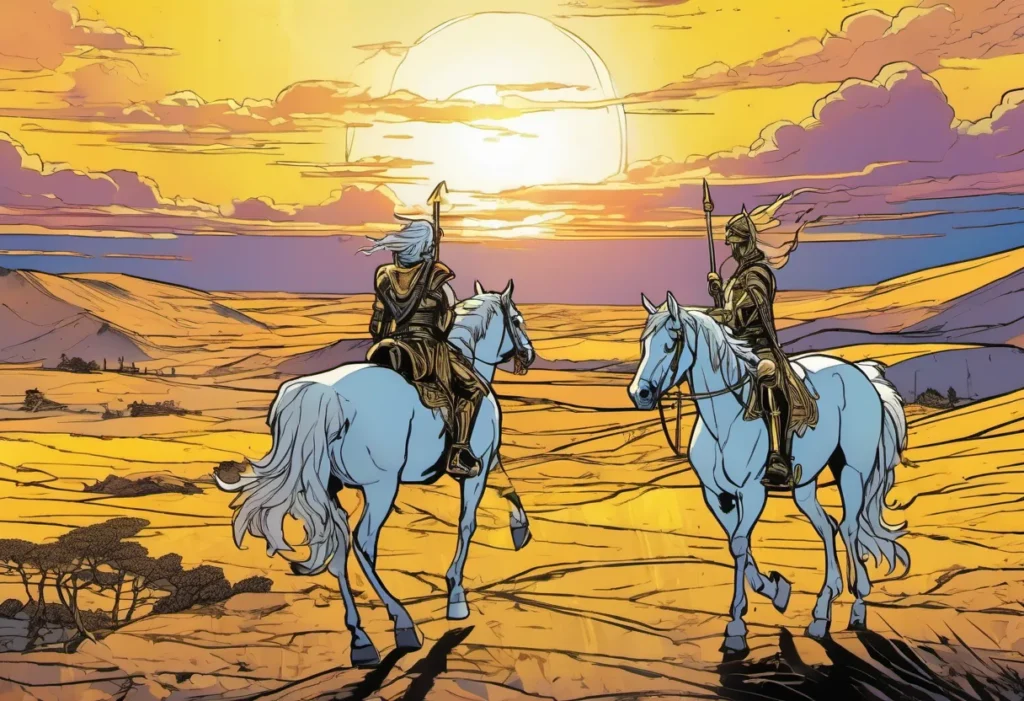
The Bhagavad Gita began on the battlefield of Kurukshetra, just before the Mahabharata war, when the archer Arjuna put down his bow in sorrow and Krishna, his charioteer, spoke to him for eighteen chapters. Gita Jayanti, kept on Margashirsha Shukla Ekadashi (Mokshada Ekadashi), remembers that day. Here is the story in six comic panels.
Every picture in this comic is an AI-generated illustration. Characters are shown only as silhouettes, by design, so the story stays in your imagination.
हिंदी में पढ़ें: गीता उपदेश की कहानी: कृष्ण, अर्जुन और कुरुक्षेत्र का रथ (चित्रकथा)
Two armies face each other at Kurukshetra
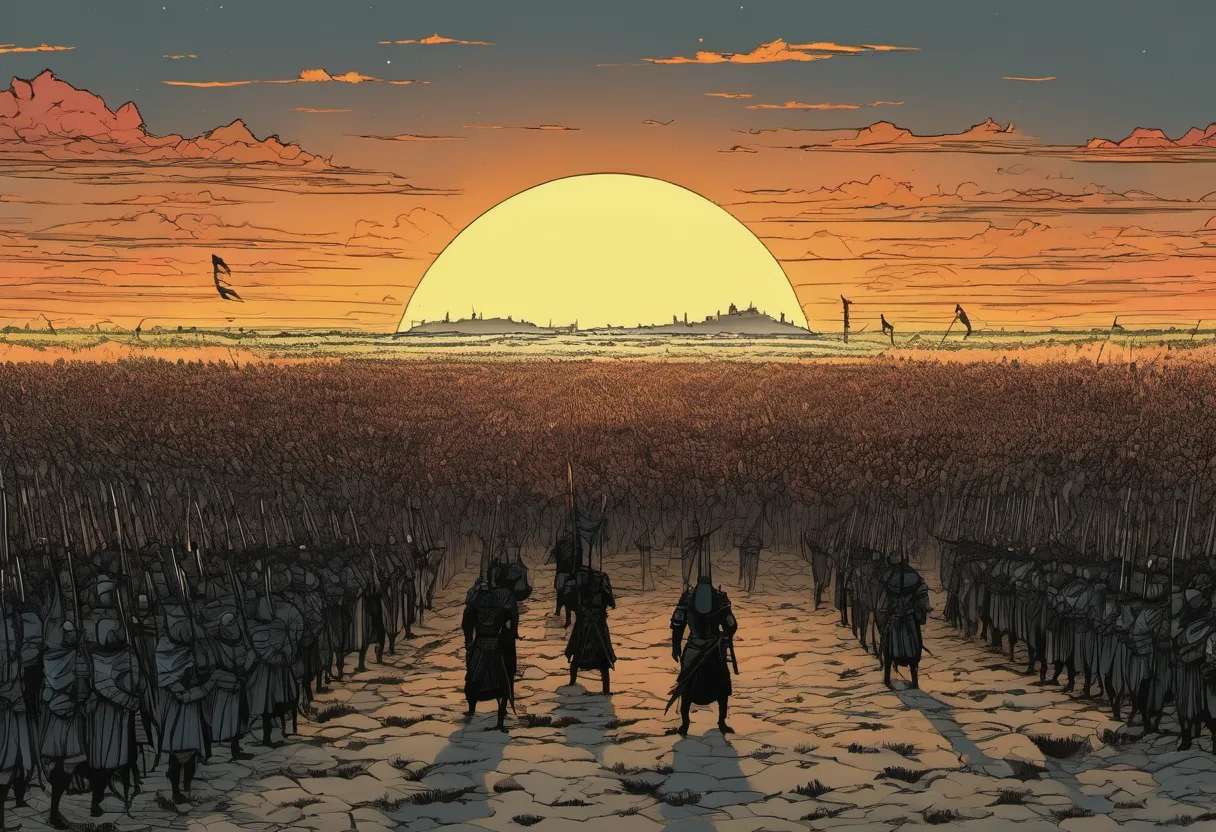
The plain of Kurukshetra was packed with soldiers, horses and elephants. Banners filled the sky. Conch shells sounded on both sides, and the great war of the Mahabharata was about to begin.
Blind King Dhritarashtra waited in his palace far away. The sage Vyasa had given his minister Sanjaya a special gift, the power to see the battlefield from afar. In the Bhishma Parva of the Mahabharata, Sanjaya begins to tell the king what he sees.
A chariot stops between the armies

Arjuna, the great archer of the Pandavas, rode in a chariot driven by his friend Krishna. Arjuna said, “Please place my chariot between the two armies, so I can see who has come to fight.”
Krishna drove the horses forward and stopped in the open space. Arjuna looked left and right. He saw teachers, uncles, cousins and old friends standing on both sides, ready to fight each other.
Arjuna lets go of his bow

Arjuna’s hands began to shake, and his mouth went dry. The famous bow Gandiva slipped from his grip. “How can I fight my own family?” he cried. “I do not want a kingdom won this way.”
He put down his arrows and sank into the seat of the chariot. The greatest warrior of his time had stopped. This is how the first chapter of the Bhagavad Gita ends, with Arjuna full of sorrow and doubt.
Krishna begins to speak

Krishna smiled gently. The battlefield seemed to grow quiet. He told Arjuna that the wise do not weep for the living or the dead.
The soul, he said, is never born and never dies. Weapons cannot cut it, and fire cannot burn it. Then he spoke of duty. Do your work with full effort, but do not cling to the reward. This is the famous verse 2.47, which people still read for courage.
The universe in a single sight

Arjuna asked to see Krishna’s true form. In chapter 11, Krishna gave him a divine eye, and Arjuna saw the whole universe at once. There were countless suns, worlds and beings, all shining in one great light.
Arjuna trembled and folded his hands. He understood that Krishna was far more than a charioteer. After that, Krishna told him that those who love and trust him with a pure heart come close to him.
"My doubt is gone"
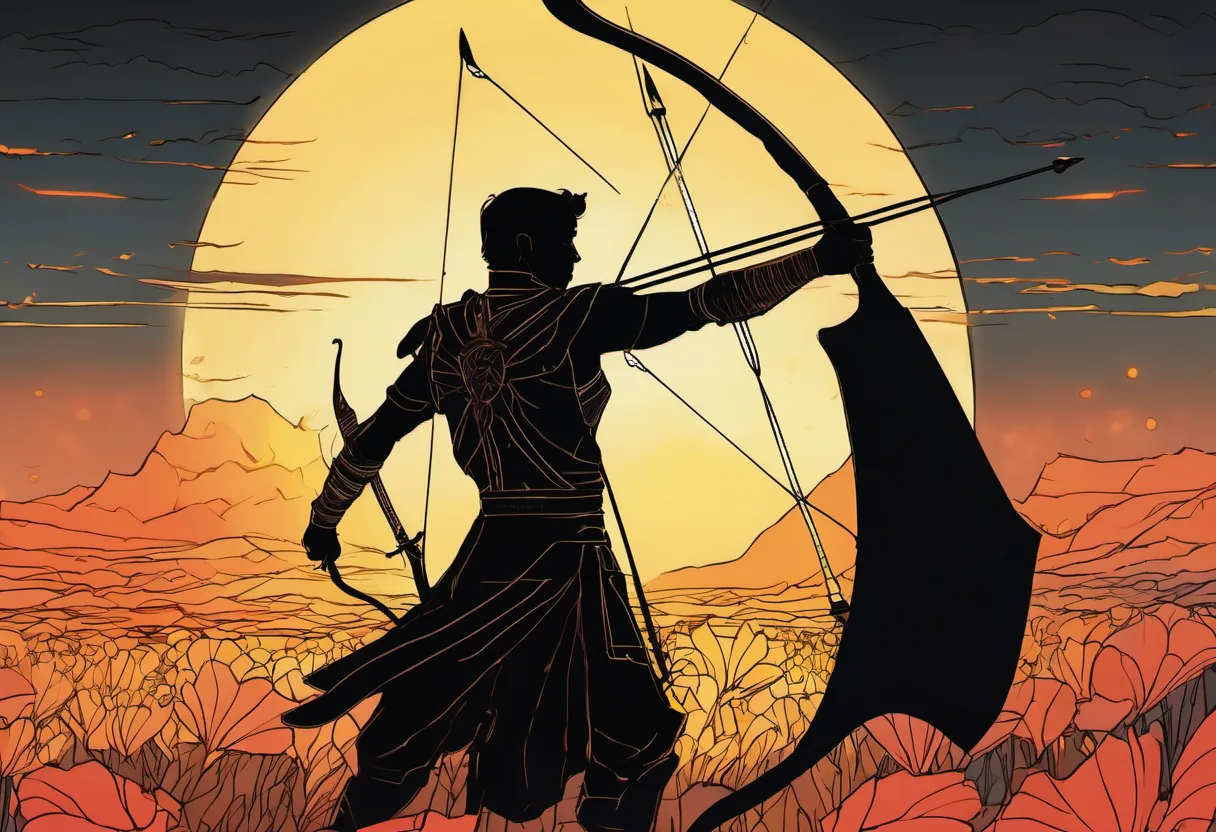
The talk lasted eighteen chapters and about seven hundred verses. At the end, Krishna told Arjuna to think it over and then choose freely.
Arjuna answered that his confusion had gone. He would do as Krishna advised. He stood up, lifted the Gandiva and the war began.
The day this teaching is remembered is Gita Jayanti, on Margashirsha Shukla Ekadashi, also called Mokshada Ekadashi. This year it falls on 20 December 2026.
Questions readers ask
What is Gita Jayanti?
Gita Jayanti is the day on which, by tradition, Krishna spoke the Bhagavad Gita to Arjuna at Kurukshetra. It is kept on Margashirsha Shukla Ekadashi (Mokshada Ekadashi), in 2026 on 20 December.
Where is the Bhagavad Gita found in the Mahabharata?
It is part of the Bhishma Parva, chapters 23 to 40 in the common edition. It has 18 chapters and about 700 verses, and it is told to King Dhritarashtra by Sanjaya.
Why did Arjuna refuse to fight?
He saw his teachers, elders and cousins on the opposite side and felt that winning would cost him everything he loved. His grief and doubt are the starting point of the Gita.
Read more
- Karmanye Vadhikaraste Shloka: Bhagavad Gita 2.47 Meaning, Word by Word
- Power of Shlokas and First shloka of Gita
- Arjuna , The Great Archer and disciple of Krishna
- Bhagavad Gita Books for Gita Jayanti: Five Editions to Choose From
A new comic goes up every Friday at 4 PM. See all of them in Comic Stories.
All pictures in this comic are AI generated.
Sources and versions
Mahabharata of Vyasa, Bhishma Parva (the Bhagavad Gita, chapters 1 to 18: Arjuna’s despair in chapter 1, the teaching on the soul and duty in chapter 2, the universal form in chapter 11 and Arjuna’s reply in chapter 18), checked against a standard Gita translation with commentary. The text itself does not name the date; the link with Margashirsha Shukla Ekadashi comes from later tradition. Sanjaya’s narration, the exact wording of Arjuna’s request and the details of the scene differ slightly between retellings. All pictures are AI-generated illustrations, with characters shown only as silhouettes.