
Imagine the last stretch of the Sun’s year. Surya’s seven horses have pulled his chariot across the sky every single morning, without a day of leave, and now they stand at the edge of the heavens with their heads low and their flanks heaving. Ahead lies a wide stretch of cold water. Behind them, the whole world waits for the light.
Aruna, the charioteer, looks at the horses and then at the sky. If they stop, the world goes dark. If they run on, they will fall. Then he notices something standing quietly beside the pond: a donkey. This is the moment families across North India have in mind when they say Kharmas has begun.
Kharmas is the month when the Sun travels through Dhanu (Sagittarius). In 2026 it begins on Dhanu Sankranti, 16 December, and ends when the Sun enters Makara on the night of 14 January 2027. Popular tradition says tired horses are replaced by a donkey (khar), so the Sun’s light and pace weaken, and weddings, housewarmings and new ventures wait. Puja, havan and Vishnu worship continue.
| Kharmas 2026-27 | Dhanu Sankranti, Wednesday 16 December 2026, to the Sun’s entry into Makara on the night of 14 January 2027 |
|---|---|
| Dhanu Sankranti moment | 10:29 AM, New Delhi (check your city’s panchang) |
| Makar Sankranti 2027 | Friday 15 January 2027 (the Sun enters Makara at 9:14 PM on 14 January) |
| Also called | Dhanurmasa; Margazhi in Tamil Nadu |
| Second Kharmas | From Meena Sankranti, 15 March 2027, until the Sun enters Mesha in mid-April |
Why the Sun’s horses needed rest
Ancient Indian art shows Surya riding a single-wheeled chariot pulled by seven horses, with Aruna, the red glow of dawn, holding the reins. Vedic hymns already speak of the Sun with his seven horses, and later tradition links them to the seven days of the week or the seven metres of Sanskrit verse. Temple sculptors loved the picture and carved it again and again.
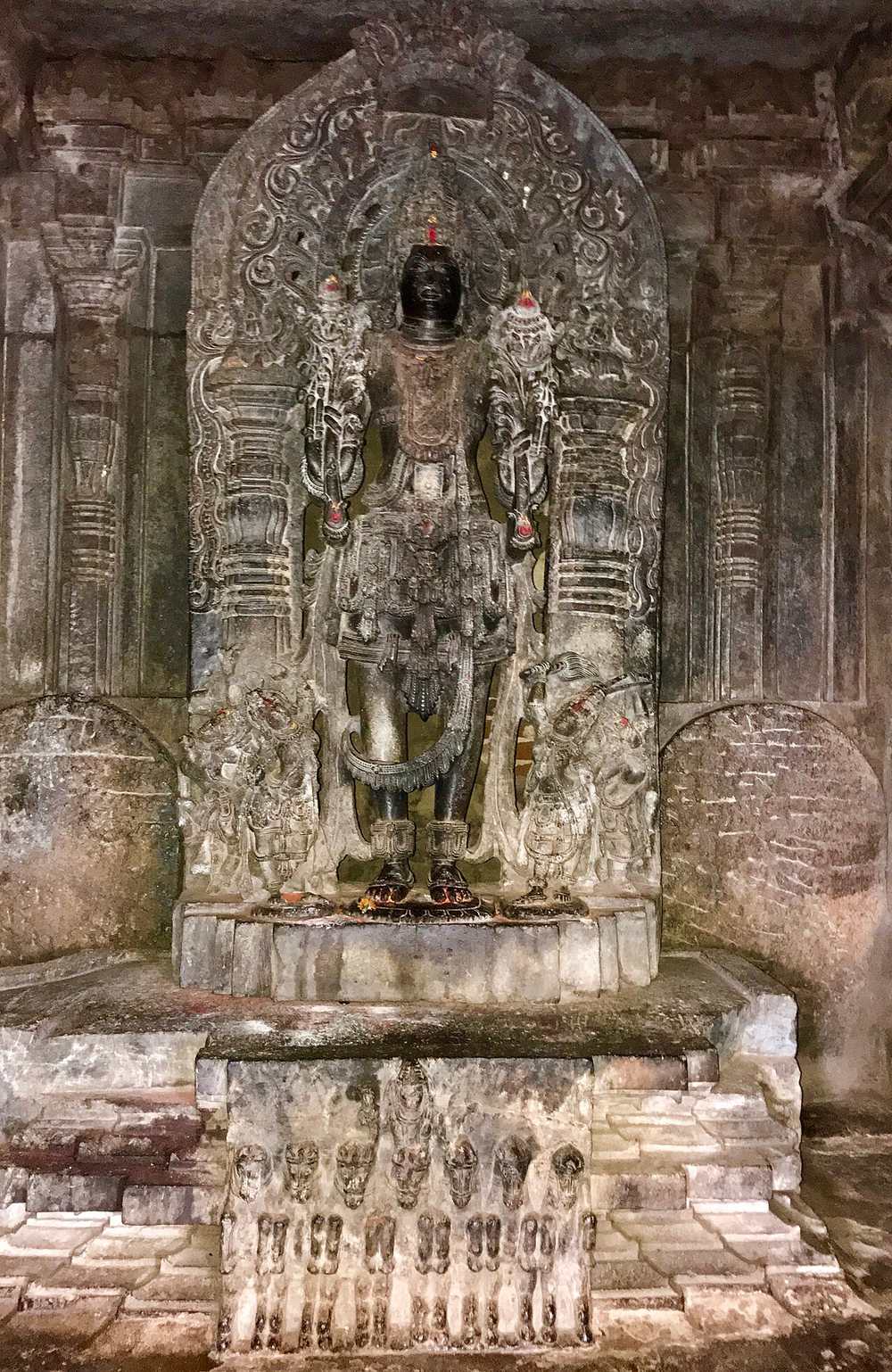

Think about the job. The chariot circles the whole world and, in the old picture, never halts. The Sun that rises on a December morning is the same one that scorched the fields in June. The story simply gives the horses a very human limit: even they must get tired.
The donkey takes the reins
Back at the pond, the horses are desperate to drink, but Surya cannot let the chariot stand, because a stopped Sun means a stopped world. Aruna makes a quick decision. The horses are unharnessed to drink and rest, and the donkey is hitched in their place.
The donkey does its best, but it is no horse. The chariot crawls. The Sun climbs late, shines weakly and slips away early, and the days feel thin, grey and cold. In the popular telling, that is how the month got its name, Khar-maas, the month of the donkey. When the horses are rested, they take the reins back, and the strong light returns with Makar Sankranti.
One honest note: this is a folk tradition. Many festival pages repeat it, but we could not find it in any Purana or other scripture, so we tell it as popular tradition, not as text. It is still a lovely way to explain something real, the short, pale-sunned days of a North Indian winter.


When the Sun serves his guru: why weddings wait
There is a second explanation, and it is quieter. Dhanu, along with Meena, is the home of Brihaspati, Jupiter, the guru of the gods. During Kharmas the Sun, in this tradition, is a guest in his teacher’s house and attends to his guru. A pupil in service is not free for celebrations.
Seen this way, the pause has little to do with a donkey or with bad luck. Auspicious work such as marriage, griha pravesh (entering a new home) and mundan is traditionally done when the panchang gives the support of both the Sun and Jupiter, and in Kharmas it does not. Families therefore wait for a better muhurat. Some sources say this explanation is debated, which is why many pandits mention both.
To meet Jupiter and the other eight planets of Indian tradition, read about the Navagraha.
A pause for weddings, not for worship
Many people think everything stops. The pause covers new ventures and big celebrations. It does not cover devotion. Puja, havan, charity, reading scripture and Vishnu worship are all encouraged, and Dhanurmasa is traditionally seen as a month for prayer. Many families read the Ramayana or the Gita in these weeks and give food and warm clothes to those who need them.
The daily routine in many homes is simple: rise early, bathe, light a lamp, offer water to the Sun, and keep the evening meal light. Offering water to the rising Sun is the same gesture at the heart of Chhath Puja. If you want the tale behind that festival, read the story of Chhathi Maiya.
Margazhi in the south: the month of dawn songs
Down south, the same month is welcomed as Margazhi in Tamil Nadu, and it is anything but gloomy. Women draw large kolams at the doorstep before sunrise, and temples ring with the Tiruppavai, the thirty verses the saint Andal sang to wake the Lord. In Karnataka and elsewhere the month is Dhanurmasa, with early-morning Vishnu worship and special offerings of pongal.


So the month of the weak Sun is also the month of the brightest dawns. The thin light before sunrise becomes the hour for prayer, and when the month ends, the harvest festivals begin: Lohri, Makar Sankranti, Pongal and Uttarayan. Read about Pongal and how Makar Sankranti arrives on the heels of Kharmas.
Kharmas 2026-27 in practice: dates and what families do
Kharmas starts on Dhanu Sankranti, Wednesday 16 December 2026 (10:29 AM in New Delhi, per Drik Panchang). It lasts until the Sun enters Makara at 9:14 PM on 14 January 2027, and Makar Sankranti is observed on Friday 15 January. Because the entry falls after sunset, the holy dip and charity of Makar Sankranti are done the next morning. Timings differ by city, so check your local panchang.
What families do is simple. They fix wedding dates for after Sankranti, delay housewarmings and big purchases, and spend the weeks on puja, charity and time together. A second, shorter Kharmas follows when the Sun is in Meena, from 15 March 2027 until mid-April.
Sources and versions
Dates come from Drik Panchang’s Sankranti pages for 2026 and 2027 (New Delhi). The horses-and-donkey story is a popular tradition retold on festival sites such as Bhakti Bharat; we could not trace it to a scripture. The Sun in Jupiter’s house is the astrological explanation. The seven horses and Aruna appear in Vedic and Puranic descriptions of Surya and in temple art such as Halebidu and Konark.
खरमास की कथा (संक्षेप में)
सूर्य देव सात घोड़ों के रथ पर पूरे वर्ष चलते हैं। लोककथा के अनुसार थके हुए घोड़ों को विश्राम देने के लिए रथ में एक गधा (खर) जोता गया, इसलिए सूर्य की गति और तेज मंद पड़ा और यह मास खरमास कहलाया। दूसरी मान्यता है कि इस समय सूर्य गुरु बृहस्पति की राशि धनु में रहते हैं, इसलिए विवाह और गृह प्रवेश जैसे शुभ कार्य रुकते हैं। पूजा, हवन, दान और विष्णु उपासना जारी रहती है। 2026 में खरमास 16 दिसंबर से शुरू होकर 14 जनवरी 2027 की रात तक रहेगा; मकर संक्रांति 15 जनवरी को मनाई जाएगी।
Kharmas FAQ
Kharmas kab se kab tak hai in 2026-27?
It starts on Dhanu Sankranti, 16 December 2026, and ends when the Sun enters Makara on the night of 14 January 2027. Makar Sankranti is observed on 15 January.
Kharmas mein shubh karya kyu nahi hote?
Tradition says the Sun is weak, either because of the donkey tale or because he is serving his guru Jupiter in Dhanu. Auspicious work such as weddings and housewarmings therefore waits for a better muhurat.
Can I do puja during Kharmas?
Yes. Puja, havan, charity, scripture reading and Vishnu worship are encouraged in Dhanurmasa, and Margazhi in the south is full of daily prayer.
For more festivals and tales, visit our Makar Sankranti guide, the next festival after Kharmas.