For years the buffalo-demon Mahishasura has ruled the heavens. A boon from Brahma says no man or god can kill him, and so the gods, thrown out of their own home, can only stand and watch. Then their anger rises as light, flames out of every face, and gathers into a single radiant woman. Shiva gives her a trident, Vishnu a discus, Indra a thunderbolt, Himavan a lion to ride. She laughs, and the three worlds shake.
For nine nights she fights, and on the tenth day she wins. India still lives that story every autumn. In the nine nights of Navratri, in the ten days of Durga Puja in Bengal, in the burning of Ravana on Vijayadashami, and in a thousand small temples, people remember the day when a goddess did what no god could do. This page brings together everything on Freeflow about Goddess Durga and Navratri: her story, the nine forms, the temples, the festival, the mantras.
Who is Goddess Durga? Durga, whose name means ‘the invincible’ or ‘difficult to reach’, is the warrior form of Devi, the Divine Mother (Shakti). She rides a lion or a tiger, carries the weapons of all the gods, and is worshipped as the destroyer of evil and the protector of her devotees. Her great story, the killing of Mahishasura, is told in the Devi Mahatmya (Durga Saptashati), a text of 700 verses that is part of the Markandeya Purana.
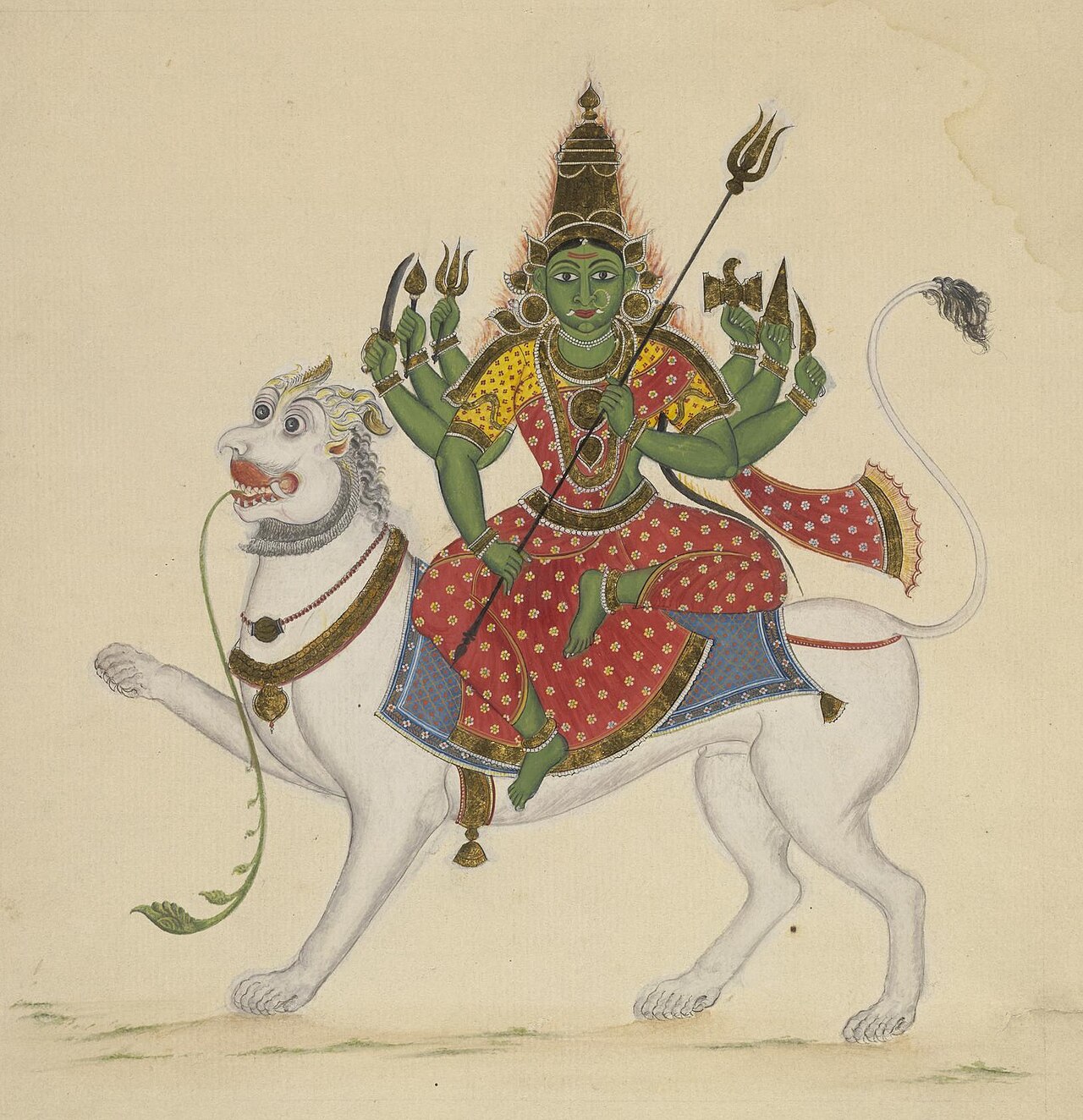

Goddess Durga at a glance
| Also called | Devi, Ambika, Shakti, Bhavani, Sherawali Mata, Mahishasuramardini. 108 names of Goddess Durga |
|---|---|
| Origin | Born from the combined energy of the gods to kill Mahishasura (Devi Mahatmya). Shaktas regard her as the original supreme power, not only a goddess created by the gods |
| Consort | Often associated with Lord Shiva as Parvati; in the Shakta view she stands alone as the supreme Devi |
| Vahana | Lion (or tiger) |
| Weapons | Trishula (from Shiva), Sudarshana chakra (Vishnu), vajra (Indra), conch, bow, sword, mace and more, in her ten (or eighteen) hands |
| Great deeds | Mahishasura; Shumbha and Nishumbha; Raktabija; Chanda-Munda; Dhumralochana |
| Nine forms (Navdurga) | Shailputri, Brahmacharini, Chandraghanta, Kushmanda, Skandamata, Katyayani, Kalaratri, Mahagauri, Siddhidatri |
| Festivals | Sharad Navratri and Durga Puja (Ashwin, September-October), ending with Vijayadashami; Chaitra Navratri (March-April) |
| Mantras | Ya Devi Sarva Bhuteshu, Sarva Mangala Mangalye, Durga Saptashati verses, Om Dum Durgayai Namah |
| Main shrines | Vaishno Devi, the Shakti Peeths, Vindhyachal, Chandi Devi (Haridwar), Kalighat |
Navratri: nine nights of worship
Navratri is nine days of worship offered to Goddess Durga, and the whole of India celebrates it. The festival of Navratri is celebrated twice a year, once in the Hindu month of Chaitra (March-April) and once in the month of Ashwin (September-October). It is a nine-day festival in which the Goddess Durga is worshipped in nine different forms. People all over the country celebrate with joy and enthusiasm, and many devotees of Maa Durga observe a fast during these nine days (the rules of the fast vary by family and region, and a fast is a personal choice).


- The story of the Navratri festival – why the festival is celebrated and what happens each day
- Nine days of Navratri – the nine days at a glance
- Navratri legends – the legends of Durga Puja and Navratri
- Navratri story in Hindi – नवरात्रि की कथा हिंदी में
- The Navratri quiz – test what you know
- Arrival and departure of Goddess Durga – the old belief about the vehicle on which Durga comes and goes each year
Goddess Durga and the story of Mahishasura
Goddess Durga is seen as the united force of all the divine powers against the evil and wickedness in the world. It is said that whenever evil rises on earth, the gods unite to end it and restore peace. When the terror of the buffalo-headed Mahishasura fell on innocent devotees and the gods themselves, the gods decided to create an all-powerful being to kill the demon king. As Mahishasura was destined to be killed only by a woman, Brahma, Vishnu and Mahesh created, through their power, a magnificent woman with ten hands. All the gods then gave her their special weapons. She was named Durga, ‘the invincible’. She fought Mahishasura for nine days (Navratri) and finally killed him on Vijayadashami. Durga is worshipped during Navratri all over India and its neighbouring countries.
- Mahishasura and Goddess Durga – the battle of the nine nights
- Goddess Durga, Shumbha and Nishumbha – the second great battle of the Devi Mahatmya
- How Raktabija was destroyed by Maa Kali – the demon whose every drop of blood became a new demon
- Killing of demons by various forms of Mahagauri – the forms of the Devi in battle
- The killing of Dhumralochana – the demon general sent to capture the Devi
- The story of Madhu and Kaitabh – the demons whom Vishnu killed with the help of Yoga Nidra, the Devi
- मां दुर्गा – माँ दुर्गा की कथा हिंदी में
- Durga, Artemis and Apollo – a comparison of Indian and Greek mythology

The nine forms of Durga (Navdurga)
Each day of Navratri belongs to one form of the Devi, in this order. Each story below has a version in English, and many have one in Hindi too. See Nine forms of Maa Durga: Navdurga for all nine in one page.
- Day 1: Maa Shailputri – the daughter of the mountain, Sati reborn; Hindi katha
- Day 2: Maa Brahmacharini – the Devi in her penance; Hindi katha
- Day 3: Maa Chandraghanta – the Devi with the moon on her forehead; Hindi katha
- Day 4: Maa Kushmanda – the Devi who smiled the universe into being; Hindi katha
- Day 5: Maa Skandmata – the mother of Skanda (Kartikeya); Hindi katha, Maa Skandmata ki katha
- Day 6: Maa Katyayani – the daughter of Sage Katyayana, who slew Mahishasura; Hindi katha
- Day 7: Maa Kalratri – the fiercest form, who removes fear; Hindi katha, व्रत कथा
- Day 8: Maa Mahagauri – the fair form of the Devi; Hindi katha
- Day 9: Maa Siddhidatri – the giver of siddhis; Hindi katha, सिद्धिदात्री माता कथा
Other forms of the Goddess
- The story of Kali – the dark and fearsome Mother
- Baglamukhi Devi – the goddess who silences enemies and removes obstacles (a Mahavidya)
- Maa Baglamukhi – a second account of Baglamukhi
- Secrets of Maa Baglamukhi – the goddess of stambhana shakti
- माँ बगलामुखी – बगलामुखी की कथा
- Shakambari Devi – the goddess who fed the world with vegetables during a famine
- Who is Alakshmi – the dark goddess, sister of Lakshmi
- Goddess Alakshmi – an unheard deity
- The story of Goddess Lakshmi – the goddess of wealth, honoured as a consort of Vishnu and a form of the Divine Mother
Stories from the epics
Another story associated with Navratri and Durga Puja is from the Mahabharata. On the occasion of Vijayadashami, the Pandavas declared their true identity after spending their last year of exile in disguise. They brought down the weapons they had hung on the Shami tree before entering the palace of King Virat to live in disguise. Since then the exchange of Shami leaves on Vijayadashami has been a symbol of goodwill and victory. Vijayadashami marks the culmination of Navratri.
In the Bengali (Krittivasi) Ramayana, Rama worships Durga before the war with Ravana, and offers her an eye in place of a missing lotus. This is not in Valmiki’s Ramayana, but it is the origin of the autumn Durga Puja in Bengal, called Akal Bodhan, the untimely awakening.
- How Devi Saraswati helped in the killing of Ravana – the divine help behind Rama’s victory
- The story of Kautsa and Vijayadashami – the Raghuvamsha tale of the Shami tree and gold coins
- Ayudha Puja or Astra Puja – worship of weapons and tools on Navratri’s ninth day
Temples and Shakti Peeths
The Shakti Peeths are the sacred places where, in the story, parts of Sati’s body fell when Shiva carried her across the land. Different Puranas list 51, 52 or 108 sites. See the Shakti Peeth hub for the complete list. Temples of the Devi on this site:
- Sati and the Shakti Peeths – the story of Sati and how the peeths were formed
- Sati Devi story in Hindi – सती की कथा और शक्तिपीठ
- Kamakhya Temple, Assam – the Shakti Peeth of the Mother’s yoni, in Guwahati
- Kalighat Temple, Kolkata – the Shakti Peeth of Kali
- Jwalamukhi Temple, Himachal – the Devi worshipped as eternal flames
- Patan Devi Temple – the Shakti Peeth in Uttar Pradesh
- Tarapeeth, West Bengal – the Shakti Peeth of Tara
- Tripura Sundari Temple – the Shakti Peeth in Tripura
- Shakti Peeths in West Bengal – a guide to the peeths of Bengal
- Mangla Gauri Temple, Gaya – the Maha Shakti Peeth
- Maa Chinnamastika, Rajrappa – the Mahavidya of Jharkhand
- Vindhyachal temple – seven unknown facts about the temple of Vindhyavasini
- Chandi Devi Temple, Haridwar – the hill temple on Neel Parvat
Festivals around Navratri
- महालया – the day that opens Durga Puja in Bengal
- Pitru Paksha and its importance – the fortnight that comes just before Navratri
- Importance of Pitru Paksha and Amavasya – Sharad Navratri begins on the day after it ends
- Gudi Padwa – the festival that opens Chaitra Navratri in Maharashtra
- Ayudha Puja – worship of tools and weapons
- Diwali festival – twenty days after Vijayadashami
Durga mantras and shlokas
The Devi’s best-known verse, Ya Devi Sarvabhuteshu, comes from the Devi Suktam in the Devi Mahatmya. Meaning and how to chant are given in each post. These are devotional chants; we do not claim any results from them. All mantras are on the Mantras hub.
- Ya Devi Sarva Bhuteshu: lyrics and meaning – the Devi Suktam
- या देवी सर्वभूतेषु – हिंदी में अर्थ
- 8 powerful Durga mantras – with meaning
- Durga Saptashati mantras – famous shlokas of the Devi Mahatmya
- Sarva Mangala Mangalye – lyrics, meaning and how to chant
- Sarva Badha Vinirmukto mantra – meaning and how to chant
- Namo Namo Durge Sukh Karni – the Durga aarti-style shloka
- दुर्गा कवच – Durga Kavach
- Beej mantras and their meaning – Dum, Hreem and other seed sounds of the Devi
- The most important mantras and their significance – a guide to mantras
Frequently asked questions about Durga and Navratri
How many days is Navratri, and when is it celebrated?
Navratri lasts nine nights, with Vijayadashami on the tenth day. There are two main Navratris each year: Chaitra Navratri in March-April and Sharad Navratri in September-October, the bigger one. Check a panchang for the exact dates each year.
Who are the nine forms of Durga?
Shailputri, Brahmacharini, Chandraghanta, Kushmanda, Skandamata, Katyayani, Kalaratri, Mahagauri and Siddhidatri, worshipped on the nine days in that order.
Why does Durga have ten hands?
The ten hands hold the weapons given by the gods. They represent the combined strength of the gods gathered in one form. Some images show eight or eighteen arms.
What is the difference between Durga, Kali and Parvati?
In the Devi Mahatmya, Durga, Kali and Parvati are all forms of the same Devi. Parvati is the gentle consort of Shiva; Durga is the warrior; Kali emerges from Durga in battle to destroy the demons such as Raktabija.
What is the story of Mahishasura?
Mahishasura was a buffalo-demon who received a boon from Brahma that no man or god could kill him. He conquered heaven, and Durga, created from the combined energies of the gods, killed him after a nine-day battle. See the full story above.
Goddess Durga and Navratri (संक्षेप में)
दुर्गा देवी की वह शक्ति हैं जो सभी देवताओं के तेज से प्रकट हुईं और महिषासुर का वध किया। नवरात्रि नौ रातों का पर्व है, जो साल में दो बार, चैत्र और आश्विन मास में मनाया जाता है। इन नौ दिनों में माँ दुर्गा के नौ रूपों की पूजा होती है: शैलपुत्री, ब्रह्मचारिणी, चंद्रघंटा, कूष्मांडा, स्कंदमाता, कात्यायनी, कालरात्रि, महागौरी और सिद्धिदात्री। दसवें दिन विजयादशमी मनाई जाती है। पांडवों ने भी इसी दिन शमी वृक्ष से अपने शस्त्र उतारे थे। देवी के प्रसिद्ध मंत्र हैं ‘या देवी सर्वभूतेषु’ और ‘सर्वमंगल मांगल्ये’। सभी कथाएँ और मंदिर ऊपर की सूची में हैं।
More from Freeflow
- Shakti Peeth – all the Shakti Peeth temples
- Mantras with meaning – Durga, Ganesha, Hanuman and more
- Lord Shiva – the husband of Sati and Parvati
- Lord Ganesha – the son of Parvati
- Lord Hanuman – the devotee of Rama, whose victory is celebrated on Vijayadashami
- The Ramayana – Rama, Ravana and Dussehra
- Festivals – Hindu festivals and their stories
All stories in the Navratri category
- मां दुर्गा
- Ya Devi Sarva Bhuteshu: Full Lyrics and Meaning (Devi Suktam)
- 8 Powerful Durga Mantras with Meaning and Benefits
- Goddess Durga , Shumbha and Nishumbha
- Namo Namo Durge Sukh karni – Goddess Durga shloka
- Second Day – Maa Brahmacharini
- Fourth Day – Maa Kushmanda
- First Day – Maa Shailputri
- Eighth Day – Maa Mahagauri
- How Raktabija was destroyed by Maa Kali
- Third Day – Maa Chandraghanta
- Durga Saptashati mantras
- Navratri legends
- Mahishasura and Goddess Durga
- The story of Navratri festival