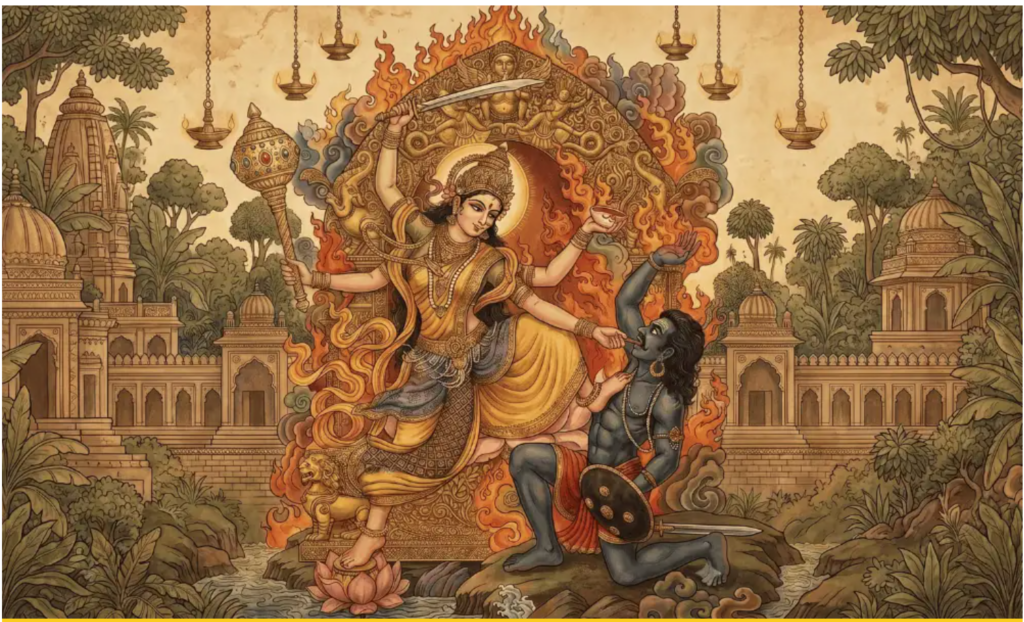
Do you find yourself facing seemingly insurmountable challenges, legal battles, or negativity holding you back? Then you need to know about Baglamukhi Devi, the powerful goddess renowned for her ability to paralyze adversaries and remove obstacles from your path. Situated 30 kilometers from Kangra in Himachal Pradesh, the Baglamukhi Devi Temple stands as a beacon of hope and protection for devotees worldwide. But who is this formidable deity, and what’s the story behind her extraordinary power? Let’s explore the captivating legend of Baglamukhi.
Baglamukhi, meaning “the one who obstructs or covers the tongue,” is a potent force within the Hindu pantheon, particularly revered as one of the ten Mahavidyas – ten goddesses embodying divine wisdom and power. These Mahavidyas are considered the ultimate manifestations of Shakti, the divine feminine energy, and each holds a unique significance in the spiritual journey. The temple itself, often considered a Siddha Peeth (a place of immense spiritual power), draws pilgrims seeking blessings for overcoming obstacles and achieving success. Pandav Nagar, a place of spiritual significance, shares a similar draw for devotees.
The Legend of Madhu and the Power of Silence
The story of Baglamukhi is deeply intertwined with a powerful demon named Madhu. According to legend, Madhu wreaked havoc upon gods and mortals alike. Unable to defeat him, the gods sought the intervention of Lord Shiva. Shiva instructed them to invoke Baglamukhi, who, with her divine power, paralyzed Madhu’s tongue, silencing his destructive force and restoring peace. This act – the silencing of a formidable enemy – is the origin of her name and the core of her devotees’ prayers: a plea for the ability to overcome obstacles and silence negativity. This story highlights the power of stillness and focused intention, a concept also explored in Durga: Read 12 Interesting Facts.
The Significance of Yellow and Besan Laddoos
A striking feature of the Baglamukhi Devi Temple is the pervasive use of the color yellow. From the temple walls to the offerings, yellow symbolizes purity, knowledge, and the ability to dispel ignorance. It’s also associated with the sun, representing enlightenment and victory over darkness. Traditional offerings at the temple include besan ki laddoo (sweet lentil flour balls), symbolizing prosperity and abundance – blessings devotees seek from the goddess. For a deeper understanding of the cultural significance of yellow, explore माँ बगलामुखी – Maa Baglamukhi story in Hindi – Ten Mahavidyas.
More Than Just Protection: A Tantric Goddess
While widely known for her ability to paralyze enemies, devotees also seek Baglamukhi’s blessings for success in endeavors, overcoming legal battles, and achieving overall well-being. She is deeply connected to Tantra, a spiritual practice focused on harnessing divine energy. Her worship often involves specific mantras and rituals designed to invoke her power and achieve spiritual transformation. Understanding the ten Mahavidyas can provide a broader context for appreciating Baglamukhi’s role. You can learn more about other powerful goddesses like The story of Goddess Lakshmi and her eight forms.
Frequently Asked Questions
- What are the Mahavidyas? The Mahavidyas are ten goddesses representing different aspects of divine wisdom and power, considered the ultimate manifestations of Shakti. Baglamukhi embodies the power to overcome obstacles and silence negativity.
- What is a Siddha Peeth? A Siddha Peeth is a place of immense spiritual power where Shakti manifested. The Baglamukhi Devi Temple is a revered pilgrimage site due to its historical significance and powerful energy.
- How accessible is the temple? The temple is accessible by road from Kangra, with buses, taxis, and private vehicles readily available.
In a world often filled with conflict and adversity, the story of Baglamukhi serves as a powerful reminder of the ability to overcome challenges and find inner strength.