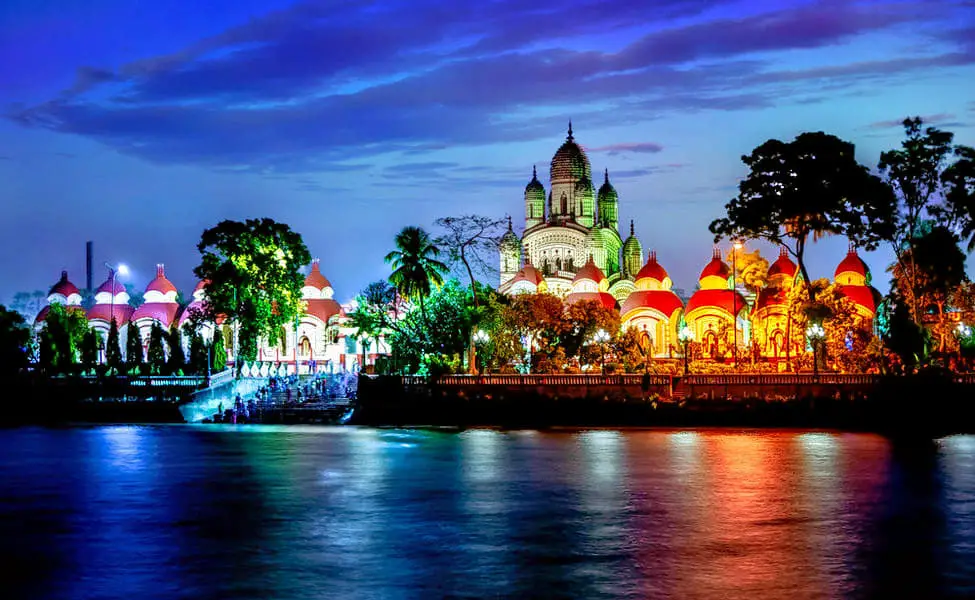
Which part of Sati fell at Kalighat? The toes of her right foot, according to the tradition. That makes Kalighat a Shakti Peeth, and Goddess Kali is worshipped here. (हिंदी में: कालीघाट में सती के दाएँ पैर की उँगलियाँ गिरी थीं।)
Kalighat, a Hindu temple and one from the 52 shakti peeths of India (lists of Shakti Peeths differ: 51, 52 or 108 depending on the text). This temple is dedicated to Goddess Kali. The temple is situated in kolkata on the bank of river Hoogly(bhagirathi).
Is Kalighat a Shakti Peeth? The story behind the temple
Sati was daughter of king Daksha she married Lord Shiva against the wish of her father. Once King Dakha was having a yagna and he didn’t invite Lord Shiva and Sati. When Sati went to her father’s palace, he insulted Lord Shiva and Sati. Unable to bear this disrespect for her husband she killed herself, when Shiva came to know this he was enraged, he began to wonder holding the dead body of Sati in his arms and he started the dance of distruction of universe. Lord Vishnu in order to save the universe and to break this attachment of Lord Shiva cut off Sati’s body into pieces with his sudarshan chakra. Sati’s body fell at different places these places are called shakti peeth. It is believed that the toes of Sati’s right foot fell here. A devotee discovered a luminant ray of light coming from the Bhagirathi river bed, and upon investigating its source came upon a piece of stone carved in the form of a human toe. He also found a Svayambhu Lingam of Nakuleshwar Bhairav nearby, and started worshiping Kali in the midst of a thick jungle.
The story of Sati and the Shakti Peeths
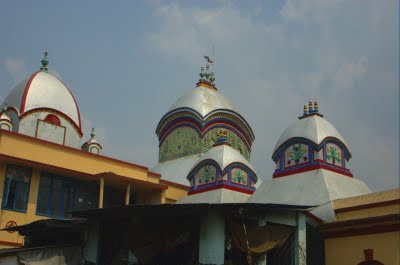
Kalighat is also associated with the worship offered to Kali by a Dasanami Monk by name Chowranga Giri, and the Chowringee area of Kolkata is said to have been named after him. Kalighat kali temple is always over crowded with devotees from all over the world.
The original temple was a small hut. Tradition says a small temple was built in the early sixteenth century by King Manasingha. The present temple was completed in 1809 under the Sabarna Roy Choudhury family, after construction began in 1798 (Wikipedia).

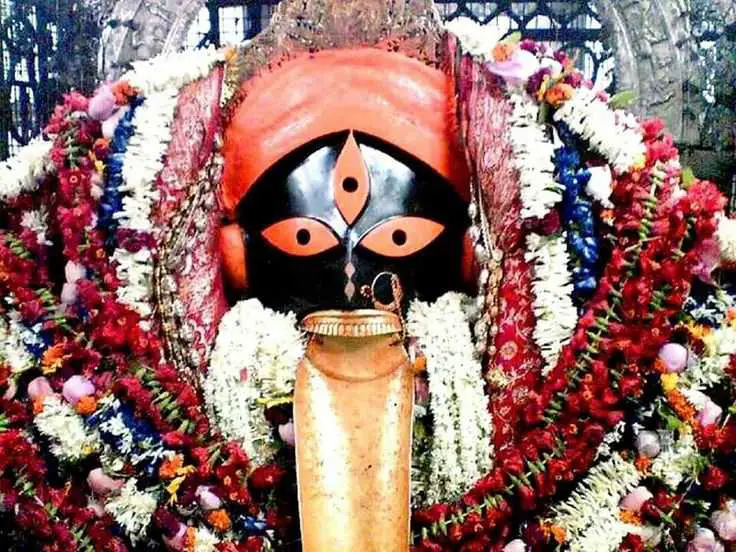
The Idol of Kali in this temple is unique and different from other Kali idols of Bengal. The idol is made of black stone and decorated with silver and gold. It has three huge eyes and a long protruding tongue made of gold and four hands, in two hands she holds a sword and a severed head and other two hands are blessing positions.
The goddess is offered a ceremonial bath every year on the snan-yatra day, the rituals being performed by the head priest. Kali represents the destructive side of Siva’s consort and demands daily sacrifices; therefore in the morning goats have their throats slit here to satisfy the goddess’s blood lust.

Kalighat Temple Timings
The Kalighat Temple is usually open to visitors every day of the week. The temple opening and closing timings may vary based on the season and Hindu festival calendar. Generally, the temple is open early in the morning and closes in the evening. The following are the typical temple timings:
- Morning: The temple usually opens between 4:00 am and 5:00 am and remains open until 12:00 pm or 1:00 pm.
- Afternoon: The temple may be closed for a few hours in the afternoon and reopens around 4:00 pm or 5:00 pm.
- Evening: The temple remains open until 9:00 pm or 10:00 pm.
Visitors are advised to check the exact temple timings before their visit, as they may change due to special events, holidays, or other circumstances.
Important facts about Kalighat
- Origin of the Name: Kalighat is derived from the Bengali words “Kalikata”, which means “The place of Goddess Kali”. The temple is said to have originated when one of the toes of Sati, the consort of Lord Shiva, fell at the site during the legendary Hindu myth of Daksha Yagna.
- Miraculous Healing Powers: The temple is believed to have miraculous healing powers, and many devotees visit the temple to seek blessings and cures for their ailments. It is said that the goddess Kali can cure the most incurable diseases and grant the wishes of those who offer prayers and offerings with a pure heart.
- The Golden Sword: Kalighat is famous for its gold-plated sword that is said to have been gifted to the temple by Raja Krishnachandra of Navadvipa. The sword is considered sacred and is used during religious ceremonies and rituals.
- Celebration of Mahalaya: The temple celebrates the Hindu festival of Mahalaya with great fervor and devotion. During the festival, the temple is decorated with lights and flowers, and thousands of devotees gather to offer prayers and participate in the rituals.
- Festival of Durga Puja: The temple is also famous for its celebration of Durga Puja, one of the biggest Hindu festivals in West Bengal. During the festival, the temple is decorated with elaborate arrangements and attracts devotees from all over the world.
These are just a few of the interesting stories and legends associated with the Kalighat Temple, a revered Hindu shrine that holds immense cultural and religious significance. It is believed that any one who worshipped here with true is heart is always saved by her.
Questions readers ask
Who built the Kalighat temple?
The present building was completed in 1809 under the patronage of the Sabarna Roy Choudhury family. Earlier shrines stood on the site, and the first was a small hut.
Which other Shakti Peeths are in eastern India?
Tarapith in West Bengal and Kamakhya in Assam are the best known. Read about Tarapith and the Kamakhya temple on this site.
Read the story of Kali for her origin, the Raktabija battle and why she stands on Shiva.