It was indeed tough for Dhritrashtra and Gandhari to name their hundred sons. Beside this, they had a daughter as well. Following are the names of them.
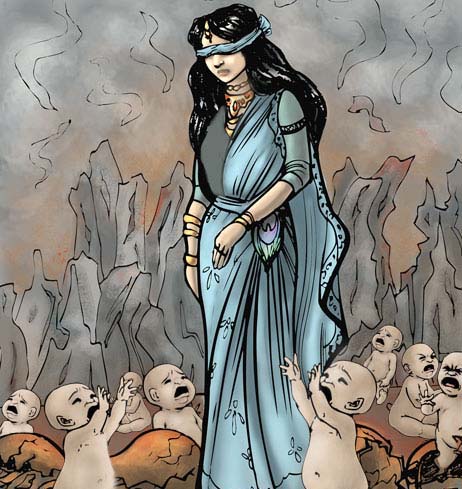
- Duryodhana
- Dussaasana
- Dussaha
- Dussalan
- Jalagandha
- Sama
- Saha
- Vindha
- Anuvindha
- Durdharsha
- Subaahu
- Dushpradharsha
- Durmarshana
- Durmukha
- Dushkarna
- Vikarna
- Sala
- Sathwan
- Sulochan
- Chithra
- Upachithra
- Chithraaksha
- Chaaruchithra
- Saraasana
- Durmada
- Durvigaaha
- Vivilsu
- Vikatinanda
- Oornanaabha
- Sunaabha
- Nanda
- Upananda
- Chithrabaana
- Chithravarma
- Suvarma
- Durvimocha
- Ayobaahu
- Mahabaahu
- Chithraamga
- Chithrakundala
- Bheemavega
- Bheemabela
- Vaalaky
- Belavardhana
- Ugraayudha
- Sushena
- Kundhaadhara
- Mahodara
- Chithraayudha
- Nishamgy
- Paasy
- Vrindaaraka
- Dridhavarma
- Dridhakshathra
- Somakeerthy
- Anthudara
- Dridhasandha
- Jaraasandha
- Sathyasandha
- Sadaasuvaak
- Ugrasravas
- Ugrasena
- Senaany
- Dushparaaja
- Aparaajitha
- Kundhasaai
- Visaalaaksha
- Duraadhara
- Dridhahastha
- Suhastha
- Vaathavega
- Suvarcha
- Aadithyakethu
- Bahwaasy
- Naagadatha
- Ugrasaai
- Kavachy
- Kradhana
- Kundhy
- Bheemavikra
- Dhanurdhara
- Veerabaahu
- Alolupa
- Abhaya
- Dhridhakarmaavu
- Dhridharathaasraya
- Anaadhrushya
- Kundhabhedy
- Viraavy
- Chithrakundala
- Pradhama
- Amapramaadhy
- Deerkharoma
- Suveeryavaan
- Dheerkhabaahu
- Sujaatha
- Kaanchanadhwaja
- Kundhaasy
- Virajass
- Yuyutsu
- Dussala (Daughter)
The 100 Kauravas in the Mahabharata
The list above is a popular transliteration. It has more than a hundred entries and repeats a few names, because lists differ between regions and manuscripts. Ganguli’s translation of the Mahabharata gives the names “according to the order of birth” (Adi Parva, section 117). It starts with Duryodhana, Yuyutsu, Duhsasana and Duhsaha. The text then adds a daughter, Duhsala, besides the hundred sons.
Who were the parents of the Kauravas?
The Kauravas were the sons of King Dhritarashtra and Queen Gandhari. Gandhari received a boon from Sage Vyasa that she would have a hundred sons. She carried the pregnancy for two years. In grief at hearing that Kunti had a son, she struck her womb, and a hard mass of flesh came out.
Vyasa sprinkled it with water, and it divided into a hundred and one parts. He placed the parts in pots of clarified butter and told her to open them after two years. Gandhari also wished for a daughter, so Vyasa made the extra part into a girl. The Mahabharata describes this in the Adi Parva (section 115 and 116).
Duryodhana, Yuyutsu and Duhsala
Duryodhana was born first, on the same day as Bhima. According to the text he cried like a donkey at birth, and jackals and vultures answered. Vidura and the Brahmanas advised Dhritarashtra to abandon the child, but the king could not do it.
Yuyutsu was born to a Vaishya maid who served Dhritarashtra while Gandhari was pregnant. He is the one Kaurava who changed sides. Just before the Kurukshetra war he told Yudhishthira he would fight for the Pandavas, and Yudhishthira accepted him (Bhishma Parva, section 43).
The daughter Duhsala was married to Jayadratha, the king of Sindhu.
Kauravas: FAQ
Who was the father of the Kauravas? Dhritarashtra, the blind king of Hastinapura.
Who was the mother of the Kauravas? Gandhari, daughter of the king of Gandhara.
Who was the eldest Kaurava? Duryodhana. Read why Karna supported Duryodhana, or start with the brief introduction to the Mahabharata.

Read next: Why Did Karna Support Duryodhana and the Kauravas? · Mahabharat Katha – A brief introduction · Mahabharat and Sholay – A resemblance
Yuyutsu was not Gandhari’s son.
Including him , kaurav were 102
Also you forgot the name VIKARNA the only one tried resisting Dushasan for insulting Panchali
Kaurava is a Sanskrit term for the descendants of King Kuru (or simply Kurava in Tamil), a legendary king who is the ancestor of many of the characters of the Mahābhārata. The well-known Kauravas are Duryodhana, Dushasana, Vikarna, Yuyutsu and Dussala. Yuyutsu is not the son of Gandhari. But he is the same age of Duryodhana and Bhima.
HOW BOTH suyodhana and duryodhana ARE OF A SAME PERSON?