
Stories of Boons from Indian Mythology
In Indian mythology, especially in times of Mahabharat and The Ramayana, we find many interesting stories related to boons. These boons were awarded by gods and sages to their devotees. The devotees performed penance so that they can be granted boons. A boon (vardan) is a gift of power or a wish granted by a god or sage, usually after long penance (tapasya). Following are the narratives of some of the famous boons: Bhishma’s choice of his death, Kumbhakarna’s sleep, Gandhari’s hundred sons, Jayadratha’s hold on the Pandavas and Bhasmasur’s touch of ash.
Famous boons in Indian mythology: Mahabharata and Ramayana
The boon (or curse) of Ashwaththama
It is believed that Ashwaththama had a boon from his father Drona, that he would not die. Another account say that he was cursed by Shri Krishna after he targeted Parikshit in an attempt to render the Pandavas heirless. In the Sauptika Parva, the curse is to wander the earth alone for 3,000 years, with a wound that never heals. Popular belief stretches this to the end of Kalyuga. Read the full story in the curse of Ashwatthama.
The boon of Bhishma
Bhishma had a similar boon to choose his own death. His father Shantanu bestowed this boon to him after he declared that he will never marry, so that Satyavati’s sons can become the ruler of the kingdom. Before that, he also forgone the throne, which was rightfully his.
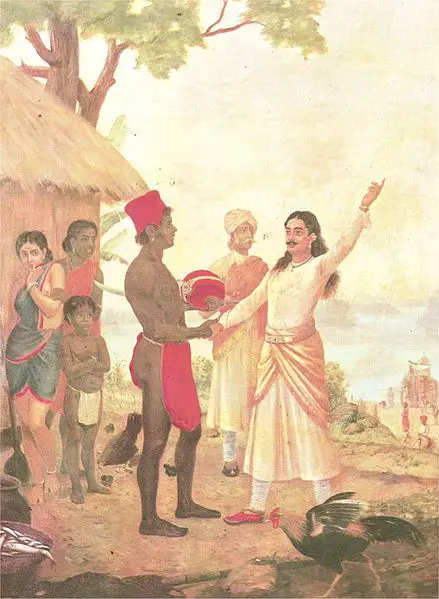
The boon (or curse) of Kumbhakarna
Kumbhakarna pleased Brahma and intended to ask the throne of Indra as a boon. But Indra asked Saraswati to help him. So instead of asking “Indraasana” (seat of Indra), he asked for “Nidraasana” (bed for sleeping). It is also said he intended to ask for Nirdevatvam (annihilation of the Devas), and instead asked for Nidravatvam (sleep). His request was granted. But his brother Ravana asked Brahma to undo this boon as it was in reality a curse. So Kumbhakarna slept for six months and then woke for one day, when he ate everything in the vicinity, including humans. Some retellings reverse this and give six months awake and six asleep. The Ramayana version is in the Yuddha Kand story of Kumbhakarna.Boon of fragrance to Satyavati by Parashar
Satyavati, the mother of author of Mahabharat, Ved Vyasa smelled like a fish. Sage Parashar saw her once and got smitten by her beauty and proposed her. Satyavati put forth couple of conditions, one of them was that she should get rid of the smell from her body. Parashar told her that this would be fulfilled and instead of the smell, a fragrance will emanate from her body which can be sensed miles away.
Vyasa boon to Gandhari for hundred sons. Ved vyasa has told Gandhari that she would be a mother of hundred sons. These sons were born from a lump of mass which gandhari gave birth to after pregnancy of two years. Ved Vyasa cut them into pieces and put them into jars. With time they came out as sons of gandhari thus making his boon true.

The boon of Vali Vali was famous for the boon from lord Shiva, according to which anyone who came before him lost half his strength to Vali, thereby making Vali invulnerable to any enemy. Once Ravana called Vali for a fight when Vali was doing his regular Sandhyavandanam. He took Ravana in his tail and took him around all the world. He was killed by Rama, when Sugriva was fighting with him.
Versions differ here. Many retellings say the boon came from Brahma, and others say Shiva. Valmiki’s Ramayana does not mention the half-strength power. It only says Vali wore a golden garland that his father Indra gave him. See Kishkindha Kand, the story of Vali and Sugriva.

The boon of Jayadratha
Jayadratha had been enslaved by the Pandavas as a punishment for trying to kidnap Draupadi. Enraged, Jayadratha had performed penances to please Lord Shiva who granted him the boon that he would be able to overpower all the Pandavas except Arjuna on one day in battle. Abhimanyu entered the Chakravyuha and the Pandavas tried to follow him but Jayadratha single handedly held them all back and Abhimanyu, unaided, was killed in the Chakravyuha.The boon of Bhasmasur
Bhasmasur obtained a boon from Lord Shiva that anything will turn into ashes, if he put his hand. He tried to test his boon on Lord Shiva only. Lord Vishnu came to his rescue and saved Lord Shiva from Bhasmasur.
Questions readers ask
What is a boon in Indian mythology?
A boon is a wish granted by a god or sage to a devotee, mostly after penance. It often carries a catch. Kumbhakarna got sleep, and Bhasmasur’s boon nearly destroyed him.
Which boon did Bhishma have?
His father Shantanu gave him the power to choose the time of his death (icchamrityu). He used it to wait for Uttarayana on the bed of arrows. See why Bhishma chose his date of death. The story of Bhishma’s oath is in the Adi Parva (section 101) of Ganguli’s Mahabharata.
वरदान क्या होता है?
वरदान देवता या ऋषि का दिया हुआ आशीर्वाद है, जो तपस्या से प्रसन्न होकर मिलता है। भीष्म का इच्छा-मृत्यु का वरदान और कुंभकर्ण की निद्रा इसके प्रसिद्ध उदाहरण हैं।
Link to Recommended Reading
For a shorter list with quick summaries, see more famous boons in Indian mythology.
never knew that Kumbhkarna was tricked in the period of The Ramayana.
Feanor: I’m not sure if the “Du” (or “Dur”) prefix was oiaginrlly meant to suggest negativity, but yes, I am confused about the whole Suyodhan/Duryodhan business. (Incidentally Ekta Kapoor’s Mahabharat treated it as an Anakin/Darth Vader thing: he’s oiaginrlly a sweet-natured boy called Suyodhan but then transforms into Duryodhan when hatred and unrest enter his mind!)See, if you look at “Vyasa’s Mahabharat” (whatever that means – the original version Jaya or the later Bharata or Mahabharat as it is today), the Kauravas are the antagonists – even in the earliest versions where Krishna isn’t a divine figure who’s puppet-mastering a Good-vs-Evil battle. But there’s enough there for the reader to be able to see shades and complexities in the characters. This is what many of the modern translators have done – see for instance Kamala Subramanian’s sympathetic portrayal of Duryodhana as a tragic Shakespearean figure with one fatal flaw. The point is that the original text is so rich that there’s plenty of scope for extrapolation of this sort.
I have one more angle to add to this – I remember reading somewhere that Duryodhan actually means ‘one who is difficult to defeat’ – as in,
Duryodhan is too skillful a warrior to fight with.
This ‘Suyodhan’ thing is a later addition, I feel, because of the formations of antonyms in Hindi by the suffix of ‘su’ or ‘dur’, which obviously made everybody feel ‘Duryodhan’ was a bad version of Suyodhan, like your Anakin-Darth Vader reference. =)