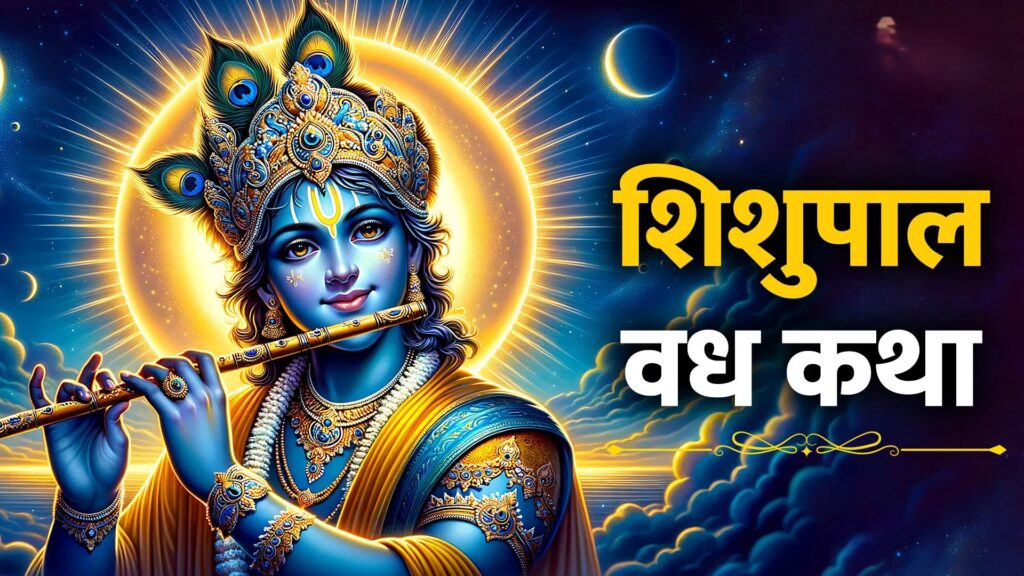
The Unyielding Shishupala: A Tale of Ego, Hatred, and Divine Justice
Shishupala was the king of Chedi and a cousin of Krishna, the son of Krishna’s father’s sister. He was born with three eyes and four arms, and Krishna killed him with the Sudarshan Chakra at Yudhishthira’s Rajasuya sacrifice after he crossed the limit of 100 offences. The Mahabharata tells this in the Sabha Parva, section 44. शिशुपाल को श्रीकृष्ण ने सुदर्शन चक्र से मारा।
Imagine a being so consumed by hatred that it sees only one purpose in life: to destroy another. This is the story of Shishupala, a king from ancient India who embodied the very essence of darkness and negativity. His tale is etched in the pages of the Mahabharata, an epic that has captivated hearts for millennia.
Who was Shishupala? His birth and parents
Shishupala’s birth was shrouded in mystery. Born with three eyes and four arms, his parents were initially inclined to abandon him due to his unusual appearance. However, a divine voice from heaven warned them not to do so, stating that Shishupala’s time had not yet come. His father was Damaghosha, king of Chedi. His mother was the sister of Vasudeva, Krishna’s father. In the Mahabharata (Sabha Parva, section 42), the voice said that the man who would kill him was the one on whose lap the extra eyes and arms would vanish. Krishna was that man. It is said that his superfluous body parts would disappear when a certain prophecy was fulfilled – one that foretold his demise at the hands of none other than Lord Krishna.
Why did Krishna forgive Shishupala 100 times?
Krishna, the embodiment of divine justice and compassion, had promised to forgive Shishupala for 100 offenses. But as their encounters continued, it became clear that Shishupala’s hatred knew no bounds. He insulted Krishna repeatedly and attacked his character. In the Mahabharata, Krishna himself lists some of the wrongs, such as burning Dwaraka and stealing a sacrificial horse of Krishna’s father. Each transgression was a test of Krishna’s patience, but he remained steadfast in his vow to forgive.
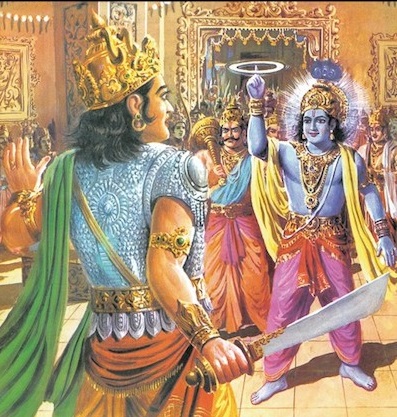
However, there came a point when Shishupala exceeded the limit. During the Rajasuya sacrifice performed by Maharaja Yudhishtira, he openly blasphemed Krishna in front of everyone. This final offense marked the end of Shishupala’s tolerance and set in motion a chain of events that would seal his fate.
How did Krishna kill Shishupala at the Rajasuya?
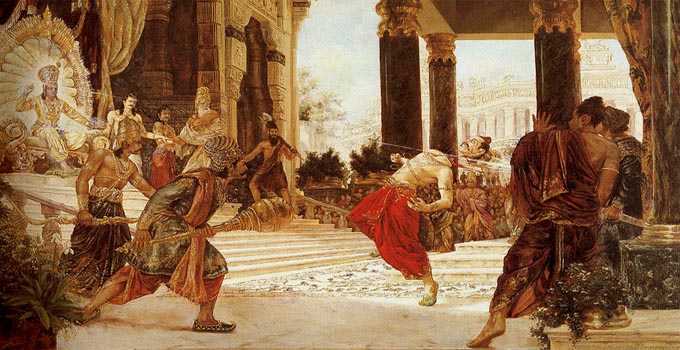
The scene is vividly etched in our minds – the grand assembly at Yudhishthira’s Rajasuya Yajna, where kings and nobles from across the land had gathered to witness the majesty of Krishna. Shishupala, fueled by his ego and hatred, chose this moment to unleash his final insult. Krishna, with a deep sense of sorrow and compassion, tolerated the offense until it was too late.
The Sudarshan Chakra moment
In that instant, as the Sudarshan Chakra whirled through the air, Shishupala’s fate was sealed. The discus struck him down, ending his life and fulfilling the prophecy. In the Mahabharata, the kings then saw a bright energy leave Shishupala’s body and enter Krishna. Later traditions, such as the Bhagavata Purana, call this liberation (moksha) and say Shishupala had been the gatekeeper Jaya in an earlier birth. Tellings differ on the details.
Philosophical Insight
Shishupala’s story serves as a poignant reminder that forgiveness has its limits. While compassion is essential, so too is accountability. Krishna’s patience was not weakness, but rather a testament to his understanding of the delicate balance between mercy and justice.
In today’s world, we often struggle with our own inner demons – the ego, hatred, and negativity that threaten to consume us. Shishupala’s tale offers a powerful lesson: that even in the depths of darkness, there is always hope for liberation. By embracing our flaws and weaknesses, we can begin to transcend them.
Did You Know?
- Shishupala was born with three eyes and four arms, a physical manifestation of his inner turmoil.
- Krishna vowed not to kill Shishupala for 100 offenses, demonstrating the power of compassion and forgiveness.
- Shishupala’s final offense marked the end of his tolerance, illustrating the importance of accountability in maintaining balance.
Modern Relevance
As we navigate our own lives, we are faced with choices that test our character. Will we choose to forgive and show compassion, or will we succumb to ego and hatred? The story of Shishupala serves as a warning – that unchecked negativity can lead us down a path of destruction.
Emotional Inspiring Conclusion
In the end, it is not the Sudarshan Chakra that brings liberation, but our own willingness to confront our inner demons. May Shishupala’s tale inspire you to face your fears and weaknesses head-on, that you may emerge stronger, wiser, and more compassionate.
Questions readers ask
Who was Shishupala’s mother?
She was the queen of Chedi and Krishna’s paternal aunt, the sister of Vasudeva. She asked Krishna to forgive her son’s offences, and Krishna promised to forgive a hundred (Sabha Parva, section 44).
Why was Shishupala against Krishna?
The Mahabharata gives old quarrels. Shishupala says Krishna was unfit for the first honour at the Rajasuya, and Krishna answers that Shishupala had harmed the Yadavas. The Bhagavata Purana adds that Rukmini was to marry Shishupala, but Krishna took her. See Krishna and Rukmini’s marriage.
शिशुपाल का वध किसने किया?
शिशुपाल का वध श्रीकृष्ण ने सुदर्शन चक्र से किया। यह राजसूय यज्ञ में हुआ, जब उसकी सौ गलतियाँ पूरी हो गईं।
References
- Shishupala – Wikipedia
- The Mahabharata, Sabha Parva, section 44 (Ganguli)
- 30 January 2026 -After the Pandava general Sahadeva defeats…
Read next: Krishna: Beyond the Flute – Darker Side Revealed · Lord Krishna: The Supreme Incarnation of Lord Vishnu · श्री कृष्ण के अनमोल वचन: Krishna Quotes in Hindi